11 Day Icons of Tasmania (Twin Share)
Additional Information
Groups Tasmania is a Tasmanian owned and operated company, offering expert local knowledge and experience of coach touring in Tasmania. Groups Tasmania has many years experience in preparing personalised group tours for both large and small specialist groups.
All our tours offer exceptional value for money whilst providing touring in excellent quality coaches, with Tasmanian drivers and clean and comfortable accommodation throughout.
Our tours offer all the wonderful sightseeing Tasmania is renowned for, along with some of the state's best known attractions.
All Groups Tasmania tours are guaranteed to depart, so once you have made your reservation you know you can start looking forward to a wonderful experience touring in Tasmania.
BOOKING CONDITIONS & GENERAL INFORMATION
•Groups Tasmania is a registered travel agent, an accredited tourism business, a participant of the Travel Compensation Fund and a member of the Tasmanian Convention Bureau.
Travel Agent Licence Number- TAS 144. ABN 73 414 536 817.
•Groups Tasmania organises tours and acts solely as agent for the persons providing services on these tours.
•All costings provided by Groups Tasmania are in Australian Dollars and include GST.
•Groups Tasmania reserves the right to alter or change the accommodation, carriers, coaches or attractions at any time for any reason. Groups Tasmania reserves the right to cancel or alter the itinerary and/or tour without notice as may be found necessary for any reason whatsoever including, but not limited to, road, weather or traffic conditions, non-performance of suppliers, industrial action, operational conditions and requirements. All additional expenses incurred as a result of delays, cancellations or alterations will be the sole responsibility of the passenger.
•All costings provided in quotes are correct at time of submission but are subject to availability or services. Groups Tasmania reserves the right to alter these costings due to changes in the itinerary due to unavailability of services or alteration of itinerary to meet passenger’s requirements. Costings will not be guaranteed until booking is made and received by Groups Tasmania.
•Any special passenger requirements must be notified to Groups Tasmania at the time of booking. Some tour services may include meals or include physical activities. Special passenger requirements may include, but not limited to, dietary requirements, mental disability and physical disability. Passengers with disabilities are recommended to be accompanied by a companion who is capable of, and totally responsible for, providing any necessary assistance.
Smoking is not permitted inside any tour coach, frequent stops will provide the opportunity for those who wish to smoke. Groups Tasmania will consider all passengers to be of good general fitness unless otherwise advised.
•Passengers are entitled to carry one suitcase with the total length, width and height not exceeding 140cm and maximum weight of 20kg. Passengers are also allowed 2 pieces of cabin baggage, with each item not exceeding 105cm and 7kg. Groups Tasmania does recommend passengers have at least one travel bag to carry valuables and personal items. Groups Tasmania does not assume liability or accept claims for loss of or damage to luggage due to breakage, theft or wear and tear through hotel or group carrier handling.
• • Groups Tasmania strongly recommends Travel Insurance.
•Due to Tasmania’s temperate climate it is recommended passengers bring comfortable casual clothing with some warmer articles for the evenings. Strong comfortable shoes are highly recommended.
•Tasmania has some of the world's most stringent quarantine regulations. Please help us retain Tasmania's disease-free status by ensuring that when you visit us you are not carrying or importing any restricted items. The introduction of a pest or disease into a production area can result in expensive controls being implemented and loss of markets, which can cost primary industries and the community millions of dollars.
Some items that are not allowed into Tasmania are; fruit, vegetables, cut flowers, plants, bulbs, corms, nursery stock, livestock, fish and fish products, grape vines (including cuttings and bud wood), honeycomb, seed for sowing, skins and hides, native birds and wildlife. There are also many others items that are not allowed and some that are allowed with permits. For more information please visit www.dpiw.tas.gov.au or call 1800 084881.
• In all matters relating to the making of arrangements for transportation by air, rail, ship, coach or car, for accommodation, meals, sightseeing tours and entertainment, Groups Tasmania acts only in the capacity as an agent for the carriers, accommodation and other suppliers noted in tour literature describing the services purchased. As an agent and because it maintains no control over the personnel, equipment, or operations of any supplier’s services Groups Tasmania assumes no responsibility for and cannot be held liable for any loss, accident, delay, inconvenience, damage or injury occasioned to any person or property as a result of any tour inclusion undertaken during the tour whatsoever or howsoever the same may be caused whether as a result of negligence or otherwise. Some tour inclusions may include activities such as trekking, climbing, caving, exploring and swimming. The passenger unreservedly accepts that these activities involve varying degrees of risk.
• • Groups Tasmania strongly recommends Travel Insurance.
- Included in price:
- Cost of tour: AUD$2899.00 per person twin share AUD$3874.00 for a single room Rates valid until April 2011 Tour Includes • Touring coach with experienced coach captain • Accommodation each night in 4 - 4.5 star motels • 10 x Breakfasts • 2 x Lunches • 5 x Quality Dinners • 4 x HIGHLIGHT Dinners • Entry to all attractions listed in itinerary
- Able to be purchased/hired:
- Domestic flights with Virgin Blue, Qantas or Jetstar can be arranged. • Pre / Post tour accommodation at the Balmoral on York can be arranged for AUD$170.00 per room (1-2 people) per night, room only. Please advise if required. • Bookings on the Spirit of Tasmania can also be arranged for you. • Travel Insurance.
- What to bring:
- Comfortable clothing, strong sturdy shoes, hat, sunblock and a small backpack. • Things of a personal nature
- Fitness level required:
- Low
- Child policies:
- Not suitable for children
- Departure points:
- Launceston, Tasmania
- Departure time:
-
10:00 AM Thu, Sun
- Pickup/departure instructions:
- Meet coach captain at 10.00am at the reception desk of the Balmoral on York, Launceston • Drop off mid afternoon in either Launceston's CBD or Launceston Airport.
- Duration:
- 11 Days
- Mar/Apr
- May
- Jun
- Jul
- Aug
- Sep
- Oct
- Nov
- Dec
- Jan
- Feb
- Mar
Tour Details
- Operator
- Groups Tasmania
- Destinations
- Hobart, Bicheno, Launceston, Deloraine, Cradle Mountain, Devonport, Port Arthur, Sheffield, Stanley, Ulverstone, Burnie, Latrobe, Tamar Valley, Strahan, Richmond, Derwent Valley, New Norfolk and Mt Wellington
- Departs From
- Launceston
Tour Description
Day 1 Arrival in Launceston (HD)
Your tour begins! Meet your experienced Tasmanian coach captain in reception at 10.00am and board the comfortable coach for a day visiting some of the sights of Launceston. Situated in the Tamar Valley, Launceston is a city of contrasts, blending history and scenery with a reputation for quality food and wine.
•Grindelwald. Nestled atop a hill 15 minutes north of Launceston, this village captures the architecture and way of life of Switzerland. Visit the speciality shops, with the Chocolate Shop a favourite.
•Moores Hill Estate Vineyard. Moores Hill Estate Vineyard was established in 1997 on the gentle slopes of the Tamar Valley in Northern Tasmania. The area is characterized by a cool climate, loamy soils and long ripening periods which are ideal conditions for high quality grapes and wines with distinctive flavours. The first grape harvest was in December 1999 with the first wine bottled in 2000. A fine Pinot Noir and Chardonnay being produced. 2002 has seen the addition of a Cabernet Sauvignon, Merlot and a Reisling.
•The Beaconsfield Mine and Heritage Centre, Beaconsfield. The Museum is located within two restored heritage buildings on the site of the 19th century Tasmanian Gold Mine. The rich Tasman reef was discovered here in 1877, and until its closure in 1914, the mine produced gold worth AUD450 million in today’s value. The Museum features an extensive collection of mining memorabilia, artifacts and machinery. Explore the Grubb Shaft Mine; see the iron smelter, water wheel and working model of the mine's dewatering pump, one of the largest of its kind in the southern hemisphere. You can also visit the miner's cottage, local store and the old Flowery Gully School. The Grubb Shaft Gold and Heritage Museum is adjacent to the Beaconsfield Gold Mine, which you can see from a viewing platform. This is the site where, in April 2006, a rock fall trapped three miners one kilometre underground. Miner Larry Knight was tragically killed, and the subsequent rescue of Brant Webb and Todd Russell, who remained trapped for 14 days, became known worldwide as the ‘Great Escape’.
•Cataract Gorge, Launceston. An expansive reserve minutes from the city centre, your coach will drop you off at Kings Bridge so you can stroll the walk way along the Cataract Gorge to the First Basin. Here the gardens filled with tree rhododendrons, spacious lawns and fern glades. Peacocks add to the colour. Cross the waters of the First Basin on the chairlift (own expense) that has the longest single span in the Southern Hemisphere or walk around the First Basin via the Alexandra Suspension Bridge. Your coach will meet you at the First Basin entrance.
•Dinner, Fluid Restaurant. Located in Launceston's finest location at the Old Launceston Seaport, Fluid Cafe Bar Restaurant is the ideal destination for your culinary indulgence. Featuring an Award winning menu, 100 plus wines, outdoor dining, bar, music and big screen, Fluid Cafe Bar Restaurant is the perfect place for your fine dining experience.
Stay: Balmoral on York, Launceston (1 night)
Day 2 Launceston to bicheno (BD)
Leaving Launceston today you visit some attractions to satisfy both gourmet and history lovers, before travelling through the Fingal Valley, towards the sunny east coast.
•The Queen Victoria Museum and Art Gallery, Launceston. The Queen Victoria Museum and Art Gallery is the largest museum and art gallery in Australia located outside a capital city and is administered by the Launceston City Council, with continuing financial support from the Tasmanian State Government. It enjoys an enviable reputation and national profile for its collections of Australian colonial art, contemporary craft and design, Tasmanian history and natural sciences. One of the special features is the interpretation of one of Tasmania's most intact nineteenth century industrial environments, the Launceston Railway Workshops.
•Tasmanian Gourmet Sauce Company, Evandale. Situated near historic Evandale on the banks of the South Esk River you will find the production and tasting centre of the Tasmanian Gourmet Sauce Company. Using only the finest Tasmanian produce, Julie Barbour and her staff create a widely acclaimed range of sauces, relishes, chutneys and gift packs.
•Woolmer’s Estate, Longford. This privately owned historical estate has been owned by the Archer family since 1816 and is a genuine example of living history. The house features many antiques, silverware and paintings. Woolmer’s walled garden was established by Thomas Archer in the 1840s, and is now being restored by the Woolmer’s Historical Foundation, replanting suitable trees, shrubs, roses and perennials. Also on sight is the National Rose Garden of Tasmania. This 2 hectare garden provides visitors with a unique journey through the evolution of the rose. It represents one of the finest collections of historic roses in the southern hemisphere.
Stay: Diamond Island Resort, Bicheno (1 night)
Optional:
Bicheno Penguin Tour
Bicheno Penguin Tours takes you to see fairy penguins at dusk on Tasmania’s east coast. The nightly evening tours offer a rare and thrilling chance to visit a private rookery. You can watch the fairy penguins (also known as the little penguin) emerge from the ocean and head for their homes. Established by Bicheno locals to protect the penguin population, the tour lets you get close to the penguins without disturbing their nightly journey.
Day 3 East coast (BD)
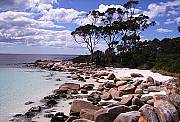
Leaving Bicheno this morning travel along the picturesque coastline to Swansea keeping an eye out for the quirky profile of Spiky Bridge. Then it’s onto Triabunna and Orford where you turn inland and head to the township of Richmond before making your way to the state’s capital, Hobart.
•Buckland Church, Buckland. In the church of St John the Baptist in Buckland, there is a stained glass window depicting the life of John the Baptist and is said to date from the 14th century. The story is that the window came originally from the Battle Abbey in England. When Oliver Cromwell was sacking the Abbeys in the 14th century the window was hidden before it could be destroyed. Two centuries later Lord Robert Cecil, then secretary of state for the colonies, gave it to Dean J.H Fosc, Buckland's Rectory. It is now set into the East wall of the church. The church was built in 1846. The Old Post Office was built at the same time and about the same time as the Old Shop House. There have been 30 Reverends at the Buckland church up to 1994.
•Richmond. Richmond was proclaimed a town by Lieutenant Governor Sorell in 1824. It played an important role as a convict station and military outpost in the early days of the colony. For much of its history it was the main gateway to the east coast and the Tasman Peninsula. You'll get the most out of Richmond by wandering its streets. Artists and craftspeople have been drawn to the town for generations, and you’ll find examples of their work in galleries and cafes. See Australia’s oldest freestone bridge, Australia’s oldest Catholic Church as well as many specialty shops that line the narrow streets of this historic village (the lolly shop is a favourite).
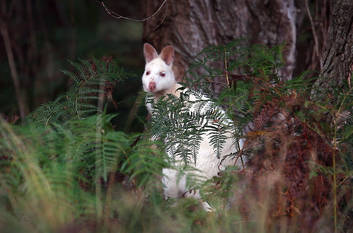
•Bonorong Wildlife Conservation Centre. Go Wild @ Bonorong Wildlife Conservation Centre is a wildlife centre located at Brighton, southern Tasmania. You can see Tasmanian devils, spotted quolls, wombats and Forester kangaroos up close. Go Wild @ Bonorong specialises in education, conservation and care of native Tasmanian animals. Established in 1981, the centre was originally a sanctuary for injured Tasmanian wildlife. Today, visitors have the opportunity to view a range of increasingly rare Australian animals and learn from rangers who specialise in wildlife research and conservation.
Stay: Wrest Point Hotel, Hobart (3 nights)
Day 4 Hobart (B)
This morning explore the famous Salamanca & Battery Point Precinct as you enjoy some free time to shop and explore for yourself what Hobart has to offer. This afternoon visit the Royal Tasmanian Botanical Gardens for a walk around these picturesque and beautifully designed gardens. Tonight dinner is at your own expense. You may choose to stay at Wrest Point or experience one of Hobart’s many fine restaurants.
•Mt.Wellington. Overlooking Hobart, the Derwent Valley to the north and Huon Valley to the south is Mt.Wellington. On a clear day you can even see the Tasman Peninsula to the southeast and Maria Island on the east coast. Venture to the summit with the afternoon sun shining on the city below for a great photographic opportunity.
•Battery Point and Salamanca Place, Hobart. Battery Point is Hobart’s village within a city, a charming gathering of quaint colonial cottages and mansions lining pebbled streets. Salamanca Place, once the bustling hub of a thriving port with its solid, multi-storied warehouses, now has a focus of a different kind with the warehouses home to some of the State’s finest galleries.
•Hobart City. Hobart is the state capital and most populous city of the Australian island state of Tasmania. Founded in 1803 as a penal colony, it is one of Australia’s oldest cities and the eleventh most populous, with a greater area population of approximately 210,000. The city of the financial and administrative heart of Tasmania, and also serves as the home port for both Australian and French Antarctic operations. The city is located in the state’s south-east on the estuary of the Derwent River and the skyline is dominated by Mount Wellington. Enjoy some free time to explore the city or do some shopping.
•Royal Tasmanian Botanical Gardens, Hobart. These gardens were established on slopes beside the River Derwent in 1818. Now in the 13.5 hectare site there are 6500 species and varieties of plants, including the largest public conifer collection in the southern hemisphere. There are more than 400 Tasmanian plant species on display, Peter Cundall's vegie patch, a stunning conservatory and a Japanese garden. Beds of annuals provide a changing display four times a year - in late September the Tasmanian Tulip Festival is held in the gardens. The Arthur Wall, near the main gate, could be internally heated so that exotic trees and plants could be grown for the kitchen garden. Although it's many years since the fires have been lit, the wall retains the suns warmth for days. Now it supports flowering creepers. Near the wall is a traditional herb garden. A new attraction is the sub Antarctic plant house featuring plants from Macquarie Island. Although 330,000 people a year visit the gardens, the impression of peace and solitude, not crowds, is the one that remains with the visitor. At the Botanical Discovery Centre are interactive displays that include information of the rich and diverse Tasmanian flora, including their distribution and how to propagate them.
Day 5 Tasman Peninsula (BHD)
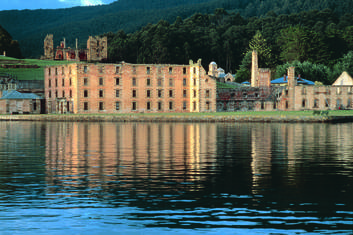
After a morning exploring the spectacular coastal formations of the Tasman Peninsula, visit the historic penal settlement of Port Arthur. Learn of the atrocities that took place here over 200 years ago. A highlight on tour prior to your return to Hobart will be a visit to the Barilla Bay Oyster Farm. Partake in a guided tour of the farm before enjoying dinner in the award winning restaurant.
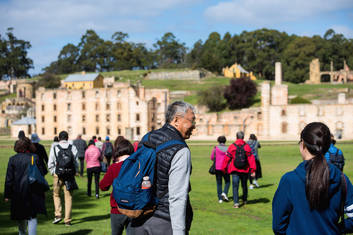
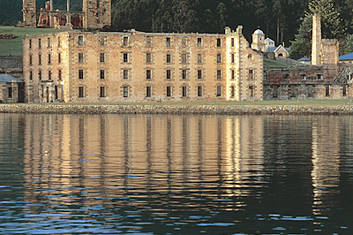
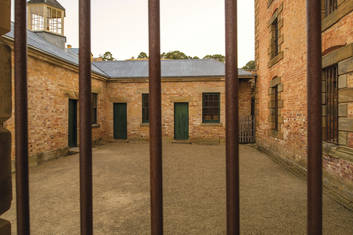
•Port Arthur Historic Site. A guided tour will take you around the ruined buildings featuring over 30 buildings including the Asylum, Separate or Model Prison, Penitentiary, Church, Guard Tower, Hospital as well as many cottages. Listen to the guides tell of atrocities to convicts in the attempt to break their spirit, which sent many insane. Read of the petty offences committed resulting in transportation from England. Rumours abound of ghosts, so keep the camera handy just in case.
•Port Arthur Harbour Cruise. The 20 minute harbour cruise offers a unique interpretation including an introduction to the ship building at Port Arthur, the boy’s prison of Point Puer, the Isle of the Dead and a magnificent coastline which remains unmatched.
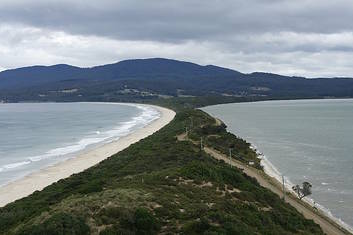
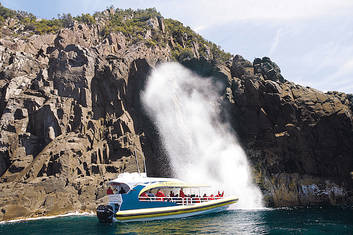
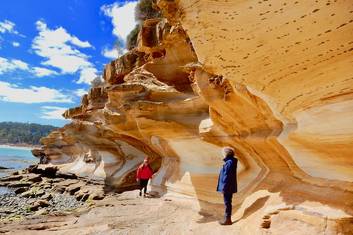
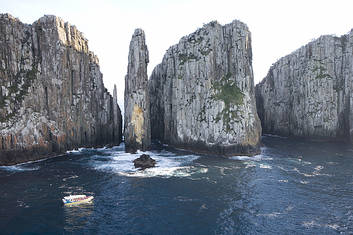
•Tasman Peninsula Coastal Features. Joined to Tasmania by a narrow isthmus, this peninsula was selected as the site for a penal settlement due to being able to guard it easily. The sheer cliffs, as seen at the Tasman Arch and Devil’s Kitchen, combined with the violent currents shown at the Blow Hole, meant little chance of escape via the sea. Rumours of shark filled waters also discouraged convicts to swim for freedom. Soldiers and fierce mastiff dogs guarded the narrow isthmus.
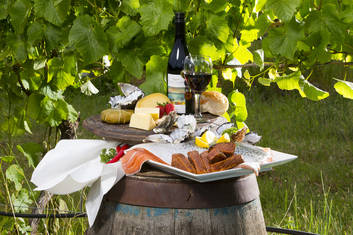
•Barilla Bay, Hobart. Barilla Bay Oysters are grown and harvested in Australia’s premium shellfish growing environment, the cold clean Southern Ocean waters of South East Tasmania. The delicate taste and texture of Barilla Bay Oysters, reflect the natural quality of the water in which they are grown. Our expert tour guides will show you how we grow oysters from working in the tiny spat to full maturity. They will also explain the importance of tides, Tasmania's clean green environment, the weather and how we process and package our oysters to ensure their freshness. At the conclusion of the tour enjoy dinner in Barilla Bay’s award winning restaurant.
Day 6 Hobart to strahan (BHD)
Say goodbye to Hobart, and travel to Strahan on Tasmania’s rugged west coast, visiting waterfalls and works of art on the way. For those that wish to take up the optional activity of the West Coast Wilderness Railway you will be in for the experience of a life time as you wind your way down to Strahan through this proclaimed World Heritage Area. Dinner tonight is a seafood buffet fresh from the days catch.
•The Wall in the Wilderness. Said to be the most ambitious art project undertaken is Australia for many years, “The Wall” is a series of story panels sculpted predominately in timber, depicting the history, hardship and perseverance of the people of the Central Highlands. Thought to take 10 years to complete the Wall will eventually consist of 100 panels each 3 metres high and 1metre wide.
•Nelson Falls. With the rainfall extremely high on the West Coast the waterfalls are spectacular.
Optional:
West Coast Wilderness Railway
Now one of Tasmania’s premier attractions, this restored 1896 rack and pinion railway will travel through one of the world’s last pristine wilderness areas, crossing 40 bridges and wild rivers. This 35km journey from Queenstown to Strahan will pass through historic settlements and abandoned camps as well as over 200m up the 1:16 rack gradient.
Stay: Strahan Village Harbour View, Strahan (2 nights)
Day 7 Gordon River (BHD)
This morning you can relax in your room or get out and explore Strahan at your own leisure. This afternoon board your state of the art catamaran as you cruise across the harbour and travel up the famous Gordon River. As the cruise does not return to approximately 8:00pm you will enjoy your dinner this evening whilst on the Gordon River with the evening sun setting in the distance.
•Gordon River Cruise, Strahan. The vessel departs Strahan and passes through Hell’s Gates, the entrance to Macquarie Harbour, then visits a trout and salmon farm enroute to Sarah Island, Tasmania’s first convict settlement, where a stopover allows for you to explore the history of the ruins. The travel up the Gordon River to Heritage Landing where you can enjoy a short walk on through rainforest.
Day 8 Strahan to smithton (BLD)
The destination today is Smithton. On the way you will visit a whiskey distillery, where after a tour you can enjoy lunch in their award winning restaurant.
•Hellyers Road Distillery, Burnie. Australia’s largest single malt whisky distillery. Hellyers Road Distillery produces fine, single malt whisky distilled from Tasmanian grown malted barley, pure Tasmanian rainwater and yeast and matured in American white oak barrels. Hellyers Road Single Malt Whisky uses the purest available ingredients and is neither chill-filtered nor artificially coloured, ensuring smooth, balanced flavours. You can take a personally-guided Whisky Walk to learn the history of Hellyers Road Distillery and discover the art of whisky-making. Visit the Visitor Interpretation Centre and relax with a whiskey or vodka in the tasting bar and lounge or enjoy delicious Tasmanian cuisine in the restaurant. The Centre also has a retail shop where you can choose from the range of Hellyers Road products.
Stay: Tall Timbers, Smithton (1 night)
Day 9 North West (BD)
As you leave the far North West this morning visit one of Tasmania’s premier gardens at Edith Creek. Then it is onto the seaside township of Stanley made famous by the granite monolith towering over the village below. Spend time exploring the village before travelling back down the coast to Devonport stopping at some scenic spots on the way.
•Allendale Gardens, Edith Creek. Six acres of magnificently landscaped gardens set around a natural trout and platypus stream, the thousands of different floral and foliage plants and trees and shrubs are ever-changing, making Allendale a garden for all seasons. Wonderful birdlife is abundant with peacocks, golden pheasants, wild ducks, white geese, black swans and more wondering throughout the property.
•Stanley Village. Absorb the pure sea air and the historic ambience of the village as you wander around the quaint craft and gift shops, gallery, cafes and restaurants. The Nut towering overhead beckons you to climb or take the chairlift to gasp at the panoramic view of the lovely coastline and green hills surrounding Stanley.
•Table Cape Lookout, Wynyard. Just beyond Wynyard and nudging out into the sea Table Cape is flat-topped and fertile, with flowering tulips carpeting its fields in spring. Stop at the lighthouse lookout for fantastic views all up and down the coast and out into Bass Strait.
Stay: Quality Inn Gateway, Devonport (2 nights)
Day 10 Cradle mountain (BLD)
Travel to one of Tasmania’s best known icons today, Cradle Mountain National Park. Enjoy lunch at Cradle Mountain and a visit to the local wilderness gallery before partaking in a tour to Dove Lake, where on a clear day the craggy peak of Cradle Mountain can be seen.
•Sheffield. The town of murals. See how talented local artists have used the proud old buildings as their canvases to tell the history of the Kentish District. Arts and crafts are also among the important activities in the area and galleries and studios display high quality hand weaving, leatherwork and pottery.
•The Wilderness Gallery, Cradle Mountain Chateau. Photographing wild places needs a mix of physical toughness, extraordinary skill and emotional sensitivity. See the captivating results in the Wilderness Gallery, Tasmania’s purpose built showcase for environmental photography. These beautiful and dramatic images from photographers based in Australia and around the world will excite your imagination, lift your spirits and expand your horizon. Enjoy lunch at Cradle Mountain Chateau.
•Cradle Mountain National Park. The northern entrance to the Cradle Mountain - Lake St.Clair National Park, the Department of Parks and Wildlife has an interpretation centre which depicts the flora, fauna and history of the region. Then it is on smaller coaches with an informative guide to transfer to Dove Lake from where on a clear day you can see Cradle Mountain.
A short walk around the shores finds you at the little hut known as ‘the boat house’, and then on your way back down from the lake call into to see Waldheim Hut, the original home for Austrian explorer Gustav Weindorfer who began the movement that eventually led to the region being included in the World Heritage Listing.
Day 11 Devonport to Launceston (B)
Last Day in Tassie! As you make your way back to Launceston today stop at the township of Latrobe and spend some time here visiting the many antique shops, a unique shopping and browsing experience before your last stops at Ashgrove Cheese Farm, the magnificent Yarns Artwork in Silk and the majestic Entally Estate. Arrive back in Launceston to catch a mid to late afternoon flight out.
•Latrobe. Latrobe presents one of Australia’s finest heritage faces, and with that face comes a host of activities and attractions, where you live the history and love the nature. The town owes its being to the early mining and agriculture and in the mid to late 19th century as a bustling port on the banks of the Mersey River. Much of the past remains in the streetscapes of central Latrobe – 76 heritage listed buildings, 6 of which are on the Register of the National Estate. Enjoy a walk along the Sheean Walkway which starts in the main street of Latrobe, at 'Teddy Sheean Memorial', and then follows the old railway line to the River Road junction, at Bell's Parade. Sheean Walk has a number of plaques detailing the various conflicts of World War II and pays homage to those involved in the Malaya, Borneo, Vietnam and Korean conflicts.
•Ashgrove Cheese Factory, Elizabeth Town. The Ashgrove Cheese Factory is a family owned and run company. Enjoy a tour of the factory and see how award-winning cheeses are made. Sample as you go.
•Yarns Artwork in Silk, Deloraine. Have a look at this community artwork before you explore the Meander Valley. Each of the four 3.5 x 4 metre panels depicts a season in the valley and its history, mountains, rivers, rural industries and lifestyle. More than 300 people worked on the project under the direction of Neicy Van Der Elst-Brown. They put in 10,000 hours of work and used 200 metres of hand dyed silk to create Yarns in embroidery, appliqué, cross-stitch, weaving, patchwork, quilting and some “hybrid” surprises.
•Entally Estate, Hadspen. Entally Estate is named after a suburb of Calcutta, India, and built in 1819 for Thomas Reibey. While he lived there he was reputed to have the most extensive library in the colony. The house contains a magnificent collection of Regency furniture and fine silver. It is surrounded by superb gardens and grounds, in which there are a greenhouse, a chapel, a coach house and stables. It seems that Reibey preferred long-lasting substance to short-term style: an article in an 1883 newspaper described the house as more designed for comfort than as a model for the exposition of any particular canons of architecture.
Tour ends back in Launceston at approximately 3.30pm.
• Legend; B=breakfast, L=lunch, D=dinner, HD = Highlight Dinner
Prices & Availability
Sorry, 22 March 2010 was not available.
Use the calendar to book instantly
Tour
11 Day Icons of Tasmania (Twin Share)